
Is Soy Healthy?
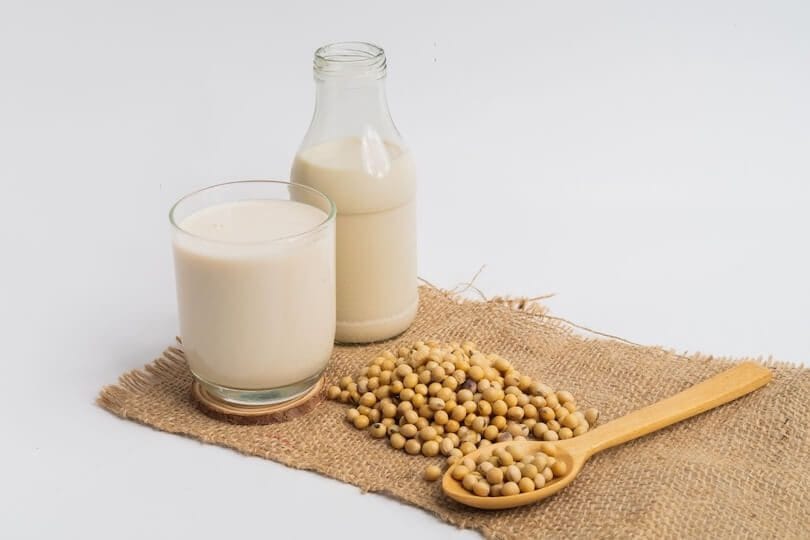
Maybe you’re thinking about eating more plant-based, but all the conflicting stories about soy leave you feeling unsure. Soy is said to increase cancer risk, drive deforestation, and even cause men to grow breasts! And yet… you also hear that soy is actually healthy. So what’s the truth?
It’s no wonder you feel confused or powerless. We get it—it’s overwhelming. Every day, we meet people who want to improve their health but get lost in the weeds of nutrition advice. You want to make the right choices, but what can you still believe?
You don’t have to figure it out alone. At Plants for Health, we help you separate facts from fiction—so you can make healthy choices with confidence.
So, Is Soy Healthy?
The fear around soy mostly comes from outdated animal studies where rats were given extremely high amounts of soy. But let’s be clear: humans are not rats, and like anything, too much of something can be harmful—even water can be toxic in excess.
Soy products like tofu, tempeh, soy milk, and edamame contain phytoestrogens—plant compounds that resemble estrogen in the human body. That’s why some people worry that soy could increase the risk of hormone-related cancers like breast cancer. But here’s the truth: It doesn’t.
Soy is very healthy. And that’s not just an opinion—it’s been thoroughly studied. Research consistently shows that soy has many health benefits. Soy (1–8):
- Is rich in high-quality plant protein—it contains all 9 essential amino acids, making it a complete protein
- Lowers LDL cholesterol (the “bad” kind), which supports heart health
- Improves blood sugar control
- Is linked to a healthier body weight
- May help reduce menopause symptoms like hot flashes
- Reduces inflammation in the body
- Does not increase cancer risk—in fact, it may protect against cancers such as breast and prostate cancer
Important note: These benefits apply to whole soy foods like tofu, tempeh, soy milk, and edamame—not to isolated soy supplements or soy isoflavone pills.
What About the Thyroid?
Soy does not cause hypothyroidism (an underactive thyroid). However, it can reduce iodine absorption—and your thyroid needs iodine to function properly. This is mainly a concern if you’re not getting enough iodine from your diet.
To ensure sufficient iodine intake, include:
- Iodized salt
- Bread made with iodized salt
- Seaweed (such as nori)
Do you have a thyroid condition or take thyroid medication? Then it’s wise to consult your doctor or dietitian—soy and other high-fiber foods may affect how your medication is absorbed. (The same goes for dairy products like milk and yogurt.)
What About the Environment?
You may have heard that soy is responsible for deforestation in the Amazon. And that’s partially true—but the full story is more nuanced. Here’s what many people don’t know:
- 80% of global soy production is used as animal feed
- Only 7% is processed into food for human consumption (e.g. tofu, soy milk, tempeh)
- The soy products we buy in supermarkets are rarely genetically modified—and if they are, it must be clearly labeled
So, your tofu or soy latte isn’t fueling Amazon deforestation. The real driver? Industrial animal farming.
Imagine This…
You walk through the supermarket, confident about which foods will support your health. No more confusion, no more frustration. You notice you have more energy. You feel better in your body. And when someone at a birthday party claims soy is bad for you, you simply smile—because now, you know better.
No more second-guessing. Just do what works—with our support. Join us.
Sources
1. Tang, J., Wan, Y., Zhao, M., Zhong, H., Zheng, J. S., & Feng, F. (2020). Legume and soy intake and risk of type 2 diabetes: a systematic review and meta-analysis of prospective cohort studies. The American journal of clinical nutrition, 111(3), 677–688.
2. Karamali, M., Kashanian, M., Alaeinasab, S., & Asemi, Z. (2018). The effect of dietary soy intake on weight loss, glycaemic control, lipid profiles and biomarkers of inflammation and oxidative stress in women with polycystic ovary syndrome: a randomised clinical trial. Journal of human nutrition and dietetics : the official journal of the British Dietetic Association, 31(4), 533–543.
3. Taku, K., Melby, M. K., Kronenberg, F., Kurzer, M. S., & Messina, M. (2012). Extracted or synthesized soybean isoflavones reduce menopausal hot flash frequency and severity: systematic review and meta-analysis of randomized controlled trials. Menopause (New York, N.Y.), 19(7), 776–790.
4. Blanco Mejia, S., Messina, M., Li, S. S., Viguiliouk, E., Chiavaroli, L., Khan, T. A., Srichaikul, K., Mirrahimi, A., Sievenpiper, J. L., Kris-Etherton, P., & Jenkins, D. J. A. (2019). A Meta-Analysis of 46 Studies Identified by the FDA Demonstrates that Soy Protein Decreases Circulating LDL and Total Cholesterol Concentrations in Adults. The Journal of nutrition, 149(6), 968–981.
5. Chi, F., Wu, R., Zeng, Y. C., Xing, R., Liu, Y., & Xu, Z. G. (2013). Post-diagnosis soy food intake and breast cancer survival: a meta-analysis of cohort studies. Asian Pacific journal of cancer prevention : APJCP, 14(4), 2407–2412.
6. Wei, Y., Lv, J., Guo, Y., Bian, Z., Gao, M., Du, H., Yang, L., Chen, Y., Zhang, X., Wang, T., Chen, J., Chen, Z., Yu, C., Huo, D., Li, L., & China Kadoorie Biobank Collaborative Group (2020). Soy intake and breast cancer risk: a prospective study of 300,000 Chinese women and a dose-response meta-analysis. European journal of epidemiology, 35(6), 567–578.
7. Otun, J., Sahebkar, A., Östlundh, L., Atkin, S. L., & Sathyapalan, T. (2019). Systematic Review and Meta-analysis on the Effect of Soy on Thyroid Function. Scientific reports, 9(1), 3964.
8. Wei, Y., Lv, J., Guo, Y., Bian, Z., Gao, M., Du, H., Yang, L., Chen, Y., Zhang, X., Wang, T., Chen, J., Chen, Z., Yu, C., Huo, D., Li, L., & China Kadoorie Biobank Collaborative Group (2020). Soy intake and breast cancer risk: a prospective study of 300,000 Chinese women and a dose-response meta-analysis. European journal of epidemiology, 35(6), 567–578.
Did you find this article helpful? Would you like to work with the experts at Plants for Health on improving your health? Our lifestyle program provides tailored guidance, practical tools, and evidence-based strategies shown to be effective. So you can make lasting changes to your lifestyle.