
Plant-Based vs. Animal Protein: Which Is Better for Muscle Growth?
Plant-based nutrition has many benefits. It is associated with a lower risk of chronic diseases, a healthier body weight, improved blood markers, and fewer complaints such as pain and stiffness. Still, many people have questions—especially when it comes to protein. Can you really get enough protein on a plant-based diet? And is plant-based protein just as good for building muscle as animal protein?
These questions are understandable, as there is a lot of confusion surrounding protein. You often hear that plant-based protein is “incomplete,” or that without meat, dairy, or eggs it’s impossible to achieve proper muscle growth. That can create uncertainty: are you doing it right? Are your muscles getting enough support? Or should you add animal products back into your diet?
At Plants for Health, we hear these questions regularly. We understand this uncertainty—but we also know how things really work. Not based on opinions or hype, but on scientific evidence. That’s why we take a closer look at this topic: does it actually matter for muscle growth whether your protein comes from plant or animal sources?
What Are Proteins, Exactly?
Proteins are the building blocks of your body. They play an important role in muscle growth and recovery, support your immune system, and contribute to long-lasting satiety after meals.
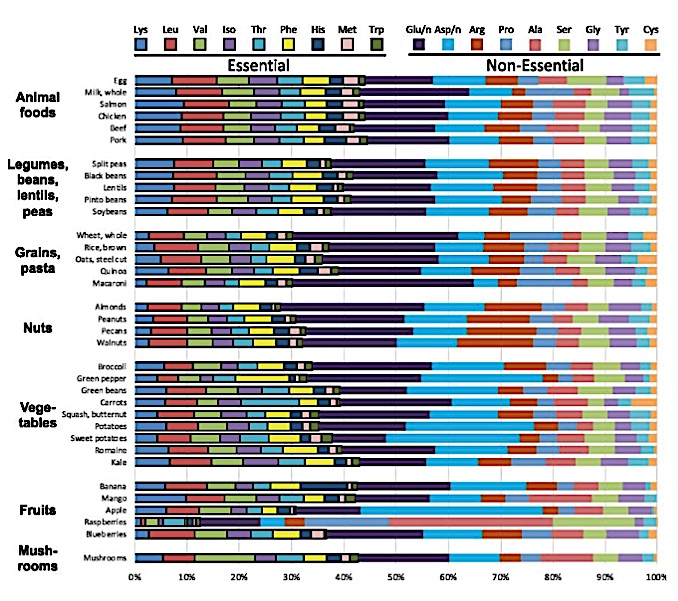
Image source: Gardner et al., Nutr Rev (2019) (1).
How Much Protein Do You Need?
For most people, 1–1.2 grams of protein per kilogram of healthy body weight is sufficient. For a woman weighing 60 kg, this equals approximately 60–70 grams of protein per day.
If you engage in intensive exercise or strength training, your protein needs may increase to about 1.6 grams per kilogram of body weight per day.
Important to note: above this amount, no additional increases in muscle mass are observed in people who do strength training (2). And this level of intake is entirely achievable with plant-based protein, as long as you consciously choose protein-rich foods and eat enough overall.
Where Do You Find Plant-Based Protein?
Protein is not found only in animal products such as meat, dairy, and eggs. Many plant-based foods are also rich in protein. It is therefore entirely possible to meet your protein needs on a mostly or completely plant-based diet. Examples of plant-based protein sources include:
Legumes such as red lentils, chickpeas, white beans, and kidney beans
Plant-based dairy alternatives made from soy or peas, such as soy quark, pea drink, and soy milk
- Tofu and tempeh
- Seitan (a meat substitute made from wheat protein)
- Nutritious ready-made meat alternatives, such as plant-based chicken pieces, minced meat alternatives, and falafel
- Nuts, seeds, and kernels
- Whole grains such as oats and quinoa
- Plant-based protein powders made from soy or peas
- By choosing one or more of these protein sources at each meal, you can already cover a large part of your daily protein needs.
Plant-Based vs. Animal Protein: What Does the Science Say?
And now the key question: do animal proteins actually lead to greater gains in muscle mass and strength than plant-based proteins? Fortunately, several high-quality studies have examined this.
In a Brazilian study, 19 vegans and 19 omnivores followed a 12-week resistance training program. Both groups consumed 1.6 grams of protein per kilogram of body weight—the vegan group from plant sources, and the omnivorous group mainly from animal sources. The result? There were no differences between the groups in gains in muscle mass or muscle strength (3).
A second study from the United Kingdom showed similar results. Participants trained more intensively, consumed as much as 2 grams of protein per kilogram of body weight, and both groups used creatine (a commonly used supplement that can support muscle strength, recovery, and athletic performance, and may also benefit brain and bone health). Again, researchers found no differences in muscle or strength gains between the groups (4).
The conclusion is clear: as long as you consume enough protein, the source does not matter. Both plant-based and animal proteins support muscle growth and strength gains.
Protein and Health: Looking Beyond Muscle
Our muscles are incredibly important—but health goes beyond muscle mass alone. When animal proteins (such as red meat, processed meat, or dairy) are replaced with plant-based proteins (such as legumes, tofu, and nuts), something important happens:
- A lower risk of cardiovascular disease
- A lower risk of all-cause mortality
Even a small shift—replacing just 3% of animal protein with the same amount of plant-based protein—already leads to positive health effects (5–7).
Legumes play a particularly important role here. This fiber-rich plant protein source is associated with a stepwise reduction in cardiovascular disease risk (up to 400 grams per week). In other words, the more legumes you eat, the greater the benefit (8).
Eating With Confidence
So yes—it is absolutely possible to become stronger and build muscle while eating (mostly) plant-based protein. And fortunately, you don’t have to choose between muscle and health. By choosing a varied diet rich in plant-based protein, you support your muscles while also promoting long-term health.
At Plants for Health, we guide you step by step in making (more) plant-based eating fit effortlessly into your life. Our advice is evidence-based, practical, and realistic. No more confusion. No more doubt. Just eating with confidence, calm, and the feeling: I know what’s good for my body.
Learn more about our Plants for Health lifestyle program and book here.
Sources
- Gardner, C. D., Hartle, J. C., Garrett, R. D., Offringa, L. C., & Wasserman, A. S. (2019). Maximizing the intersection of human health and the health of the environment with regard to the amount and type of protein produced and consumed in the United States. Nutrition reviews, 77(4), 197–215.
- Morton, R. W., Murphy, K. T., McKellar, S. R., Schoenfeld, B. J., Henselmans, M., Helms, E., Aragon, A. A., Devries, M. C., Banfield, L., Krieger, J. W., & Phillips, S. M. (2018). A systematic review, meta-analysis and meta-regression of the effect of protein supplementation on resistance training-induced gains in muscle mass and strength in healthy adults. British journal of sports medicine, 52(6), 376–384.
- Hevia-Larraín, V., Gualano, B., Longobardi, I., Gil, S., Fernandes, A. L., Costa, L. A. R., Pereira, R. M. R., Artioli, G. G., Phillips, S. M., & Roschel, H. (2021). High-Protein Plant-Based Diet Versus a Protein-Matched Omnivorous Diet to Support Resistance Training Adaptations: A Comparison Between Habitual Vegans and Omnivores. Sports medicine (Auckland, N.Z.), 51(6), 1317–1330.
- Monteyne, A. J., Coelho, M. O. C., Murton, A. J., Abdelrahman, D. R., Blackwell, J. R., Koscien, C. P., Knapp, K. M., Fulford, J., Finnigan, T. J. A., Dirks, M. L., Stephens, F. B., & Wall, B. T. (2023). Vegan and Omnivorous High Protein Diets Support Comparable Daily Myofibrillar Protein Synthesis Rates and Skeletal Muscle Hypertrophy in Young Adults.
- Chen, Z., Glisic, M., Song, M., Aliahmad, H. A., Zhang, X., Moumdjian, A. C., Gonzalez-Jaramillo, V., van der Schaft, N., Bramer, W. M., Ikram, M. A., & Voortman, T. (2020). Dietary protein intake and all-cause and cause-specific mortality: results from the Rotterdam Study and a meta-analysis of prospective cohort studies. European journal of epidemiology, 35(5), 411–429.
- Song, M., Fung, T. T., Hu, F. B., Willett, W. C., Longo, V. D., Chan, A. T., & Giovannucci, E. L. (2016). Association of Animal and Plant Protein Intake With All-Cause and Cause-Specific Mortality. JAMA internal medicine, 176(10), 1453–1463.
- Huang, J., Liao, L. M., Weinstein, S. J., Sinha, R., Graubard, B. I., & Albanes, D. (2020). Association Between Plant and Animal Protein Intake and Overall and Cause-Specific Mortality. JAMA internal medicine, 180(9), 1173–1184.
- Mendes, V., Niforou, A., Kasdagli, M. I., Ververis, E., & Naska, A. (2023). Intake of legumes and cardiovascular disease: A systematic review and dose-response meta-analysis. Nutrition, metabolism, and cardiovascular diseases : NMCD, 33(1), 22–37.
You might also find this interesting:
Did you find this article helpful? Would you like to work with the experts at Plants for Health on improving your health? Our lifestyle program provides tailored guidance, practical tools, and evidence-based strategies shown to be effective. So you can make lasting changes to your lifestyle.