
Does exercise damage your Joints?

Are you worried that exercise will damage your joints further? You’re not alone. Many people with osteoarthritis, rheumatoid arthritis, or joint pain share this fear. You know that exercise is important for your health, but you don’t dare to start or you simply don’t know where to begin. Fortunately, research shows something very different.
Can you exercise safely with arthritis?
Yes! If you have a joint condition like rheumatoid arthritis or osteoarthritis, movement is beneficial. Exercise and strength training are safe can improve joint complaints, reduce pain, and enhance physical function.
For rheumatoid arthritis, research shows that exercise can improve disease activity scores and inflammation markers (1,2). Even high-intensity exercise has been found to be safe and doesn’t increase disease activity or cause joint damage (3).
For osteoarthritis of the knee and hip, systematic reviews confirm that physical activity reduces pain, physical function, and improves quality of life (4,5).
Multiple exercise types show benefits: aerobic exercise, resistance training, aquatic exercise, yoga, and tai chi (6-10). The key takeaway: stay physically active and integrate various forms of movement into one’s routine. Learn more here about how much movement is optimal.
How Does Exercise Help with Arthritis?
Regular exercise helps manage arthritis in multiple ways and protects your joints.
Stronger muscles mean more stable joints
When you exercise, especially through strength training, the muscles and tendons around your joints become stronger. Stronger muscles, particularly around the knee, ensure that pressure is better distributed across the joint (11). As a result, your joints experience less stress.
Less weight, less pressure
Exercise helps you maintain or achieve a healthy weight. This is beneficial because every kilo less means less pressure or load on your joints (11). Also, excess weight causes inflammation in your body, and it’s precisely this inflammation that contributes to arthritis (12).
Exercise Reduces Inflammation
Exercise has a powerful anti-inflammatory effect. Physical activity lowers the amount of inflammatory substances in your blood, improves immune system function, and reduces oxidative stress (13). During exercise, your body also produces special substances called myokines (13). These substances are anti-inflammatory and can help reduce the pain and stiffness of arthritis.
Additional Benefits
Furthermore, regular exercise improves your fitness, reduces your risk of falling, keeps your joints flexible, and helps prevent other health problems such as cardiovascular disease and diabetes.
The Key to Healthy Aging
In short: staying active is not only good for your joints, it’s also one of the best ways to stay healthy longer. Numerous scientific studies show that adequate exercise is essential for a vital and healthy life in later years.
Frequently asked questions about exercise and joint health
Does exercise make arthritis worse?
No. Research consistently shows that exercise does not worsen arthritis. In fact, exercise reduces pain, improves physical function, and enhances quality of life for people with different types of arthritis like rheumatoid arthritis and osteoarthritis. Even high-intensity exercise has been proven safe and does not increase joint damage.
What exercises are safe for arthitis?
Multiple types of exercise are safe for arthritis: aerobic exercise, resistance training, aquatic exercise, yoga, tai chi, and more. The key is to find something you enjoy to do and start at an appropriate level for your current abilities and progress gradually. Consider working with a physical therapist to develop a personalized plan.
Can I build muscle with osteoarthritis?
Yes. People with osteoarthritis can build muscle through resistance training and strength exercises. Strong muscles provide crucial support for arthritic joints, reducing pain, and improving function.
Can I exercise if my joints hurt?
Yes, in most cases. Some discomfort during exercise is normal and doesn’t mean you’re causing damage. However, sharp pain or pain that persists after exercise may indicate you need to adjust your approach. Start at a lower intensity and progress gradually. If you’re unsure, consult with a physical therapist or healthcare provider who can guide you safely.
Take the first step today
At Plants for Health, we know how important movement is for joint health. We also know how difficult it is to make exercise a consistent part of your life.
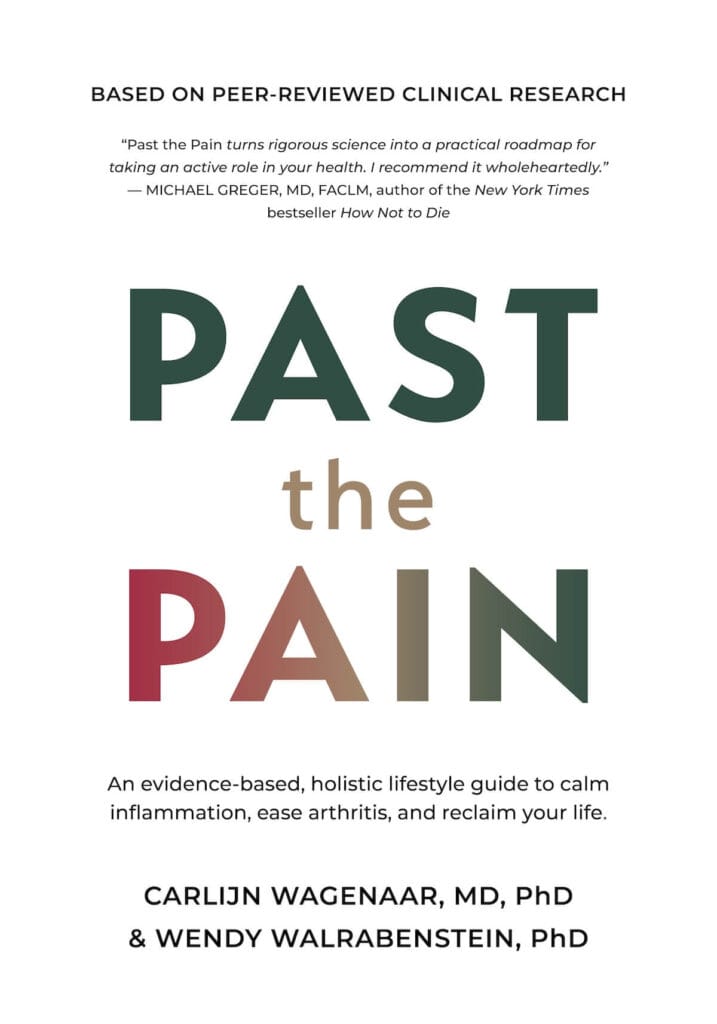
That’s why we created simple movement routines that you can do at home. You can find these in our book and program. They offer different levels to suit you—whether you’re just starting out or already advanced.
No complicated equipment. No gym membership required. Just practical exercises that fit into your daily routine.
Ready to build lasting health habits? Discover how our book and program can support you in making healthier choices that work and last.
References
- Katz P, Andonian BJ, Huffman KM. Benefits and promotion of physical activity in rheumatoid arthritis. Curr Opin Rheumatol. 2020 May;32(3):307-314.
- Sveaas SH, Smedslund G, Hagen KB, Dagfinrud H. Effect of cardiorespiratory and strength exercises on disease activity in patients with inflammatory rheumatic diseases: a systematic review and meta-analysis.
- Grenier JP, Thiel A. Effectiveness and safety of high-intensity exercise in rheumatic diseases-friend or foe? A systematic review. Rheumatology (Oxford).
- Grenier JP, Thiel A. Effectiveness and safety of high-intensity exercise in rheumatic diseases-friend or foe? A systematic review. Rheumatology (Oxford).
- Kraus VB, Sprow K, Powell KE, Buchner D, Bloodgood B, Piercy K, George SM, Kraus WE; 2018 PHYSICAL ACTIVITY GUIDELINES ADVISORY COMMITTEE*. Effects of Physical Activity in Knee and Hip Osteoarthritis: A Systematic Umbrella Review.
- Gwinnutt JM, Wieczorek M, Cavalli G, Balanescu A, Bischoff-Ferrari HA, Boonen A, et al. Effects of physical exercise and body weight on disease-specific outcomes of people with rheumatic and musculoskeletal diseases (RMDs): systematic reviews and meta-analyses informing the 2021 EULAR recommendations for lifestyle improvements in people with RMDs.
- Yan L, Li D, Xing D, Fan Z, Du G, Jiu J, Li X, Estill J, Wang Q, Belal AA, Tian C, Li JJ, Li S, Liu H, Liu X, Ren Y, Yang Y, Chen J, Hu Y, Ge L, Wang B. Comparative efficacy and safety of exercise modalities in knee osteoarthritis: systematic review and network meta-analysis.
- Zhu SJ, Hinman RS, Nelligan RK, et al. Online Unsupervised Tai Chi Intervention for Knee Pain and Function in People With Knee Osteoarthritis: The RETREAT Randomized Clinical Trial.
- Abafita BJ, Singh A, Aitken D, et al. Yoga or Strengthening Exercise for Knee Osteoarthritis: A Randomized Clinical Trial.
- Hurkmans E, van der Giesen FJ, Vliet Vlieland TP, Schoones J, Van den Ende EC. Dynamic exercise programs (aerobic capacity and/or muscle strength training) in patients with rheumatoid arthritis.
- Sharma L. Osteoarthritis of the Knee. N Engl J Med. 2021 Jan 7;384(1):51-59. doi: 10.1056/NEJMcp1903768. PMID: 33406330.
- Furman D, Campisi J, Verdin E, Carrera-Bastos P, Targ S, Franceschi C, Ferrucci L, Gilroy DW, Fasano A, Miller GW, Miller AH, Mantovani A, Weyand CM, Barzilai N, Goronzy JJ, Rando TA, Effros RB, Lucia A, Kleinstreuer N, Slavich GM. Chronic inflammation in the etiology of disease across the life span.
- Li Z and Wang X-Q (2023) Clinical effect and biological mechanism of exercise for rheumatoid arthritis: A mini review.

Did you find this article helpful? Would you like to work with the experts at Plants for Health on improving your health? Our lifestyle program The Inflammation Practice provides tailored guidance, practical tools, and evidence-based strategies developed from clinical research. To support lasting changes to your lifestyle.